
The Future of Primary Care Was in Kansas City at AAFP FUTURE
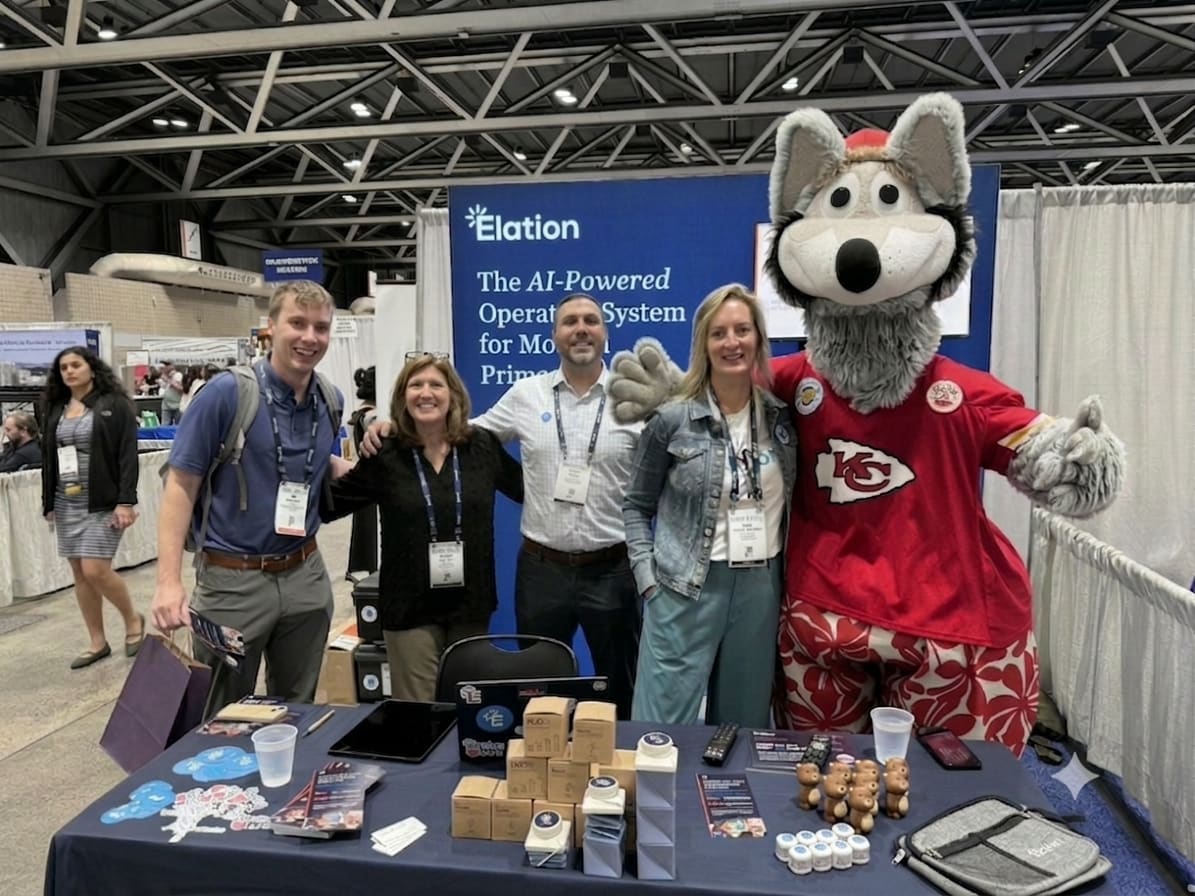
Four years ago, I made a case that Elation should be at AAFP FUTURE. Not to sell software. To show up at ground zero, the one national event where the next generation of family physicians is actively deciding what kind of career they want, and make the case for independent primary care before anyone else got there first.
We've been back every year since. This year, I attended alongside Trishia Monaco (senior customer marketing manager at Elation) and Casey Hogan (senior director of customer services at Elation), and the energy was unlike anything I've seen before at this event. More than 1,600 medical students and residents filled the Kansas City Convention Center. We had over 100 conversations. We ran out of swag. I genuinely cannot remember that happening before.
Something has shifted.
The Booth That Started Conversations
This year we introduced something new: a rack card developed exclusively for FUTURE, aimed squarely at the question every student and resident in that hall was quietly asking: What does my career actually look like from here?
The headline said it plainly: Before You Sign That Hospital Contract. The card then laid out the math: 54% of physicians in hospitals and large systems report burnout. 13.5% in independent practice. The argument made itself.
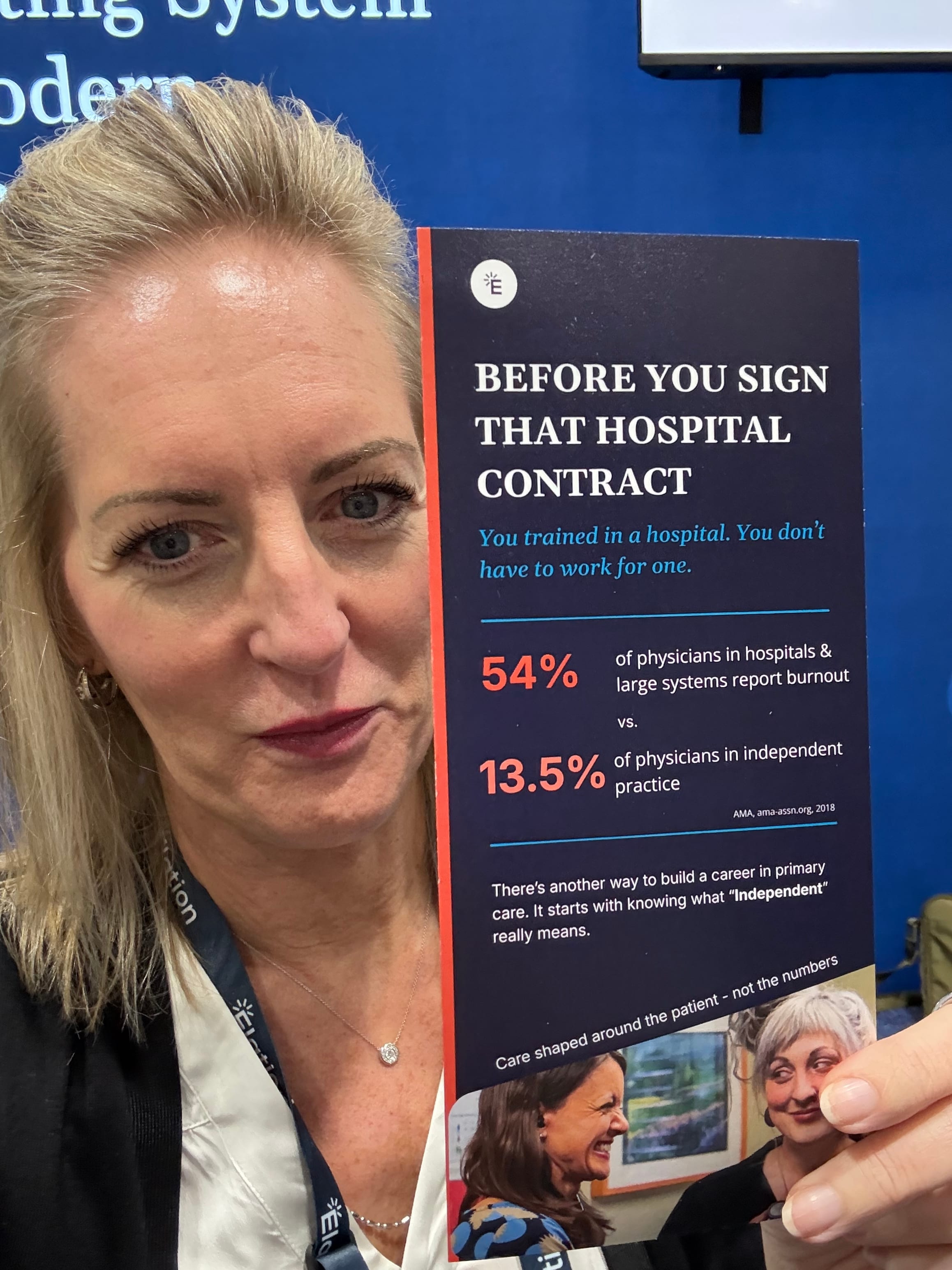
The cards were gone before the conference ended. AAFP staff picked them up off our table to share internally. That's not something that usually happens. When the people running the event want your materials, you've hit a nerve.
We also sponsored the event lanyards this year, which had the effect of sending people hunting for our booth throughout the expo hall. Good problem to have.
What People Actually Wanted to Talk About
AI. Everyone wanted to talk about AI.
Not abstractly. Not the "AI is coming for your job" kind of conversation. These students and residents wanted to understand what an AI-powered platform for primary care actually does in practice. What does it look like inside an exam room? Does it free you, or does it just add a new layer to manage? The questions were genuinely sophisticated, which tells you something about how much the conversation in medical education has matured.
We also heard a lot of curiosity about what it means to practice independently: what the models are, what the day actually looks like, whether it's financially viable right out of residency. Trish, attending FUTURE for the first time, hit her stride quickly and was deep in conversation after conversation by the end of day one. Casey, back for his second year, already knew the rhythm. The booth stayed busy from open to close.
The DPC Session That Overflowed
Dr. Tiffany Leonard gave a talk on direct primary care, and the room ran out of seats. She came prepared with something thoughtful and immediately practical: a handout listing DPC practices all over the country that are actively hiring. Every copy was gone by the time the session ended.
This matters more than it might seem at first. One of the biggest hesitations I hear from residents interested in DPC is the pressure of building something from scratch: finding patients, setting up infrastructure, navigating the business side of practice before you've fully found your footing clinically. A curated list of established DPC practices looking for physicians flips that equation entirely. You can step into a model that already works, with mentorship and a patient panel waiting, and start doing exactly the kind of medicine you went into family medicine to do. The entrepreneurial path is still there for those who want it. But now there's an on-ramp.
What I Keep Thinking About
A friend walking through the expo hall called the attendees "shiny pennies." He meant it as a compliment. There's a particular quality to the energy at FUTURE: youthful, curious, not yet beaten down by the system. These are physicians before the system has had its full say about them.
That is exactly why we show up. Not to make a sale. To be part of the conversation before someone else fills the silence with a hospital contract and a productivity quota.
57% of Americans don't have a primary care physician. The physicians in that hall are the ones who could change that, if they go where they can actually practice medicine the way it was meant to be practiced. Independent. Longitudinal. Organized around the patient, not the system.
Every year I leave FUTURE more convinced that the movement is building. This year, I left certain of it.
If you're a student or resident thinking about what independent practice looks like, start here: elationhealth.com/future-2026. We put together a sample patient chart so you can see exactly what it feels like to work in Elation before you ever make a decision. Come find us next year. We'll bring more swag.